Before we publish our newest
material, we’d like to take a moment to share some data that may help put America’s
latest riots into context.
In Minneapolis, a suspect resisting
arrest has died after a policeman kneeled on his neck for several minutes.
Minneapolis is a
midwestern city peopled largely by the remnants of 19th-century Scandinavian
and German settlers. Its citizens tend to be progressive, tolerant fans of immigration. They are known to be mild-mannered and avoid conflict, summed up in the phrase 'Minnesota nice.'
But this incident,
especially the photo above whose knee-on-neck so viscerally evokes old lynching
photos, has led to mass violence, looting, and arson not only in Minnesota but all over the country.
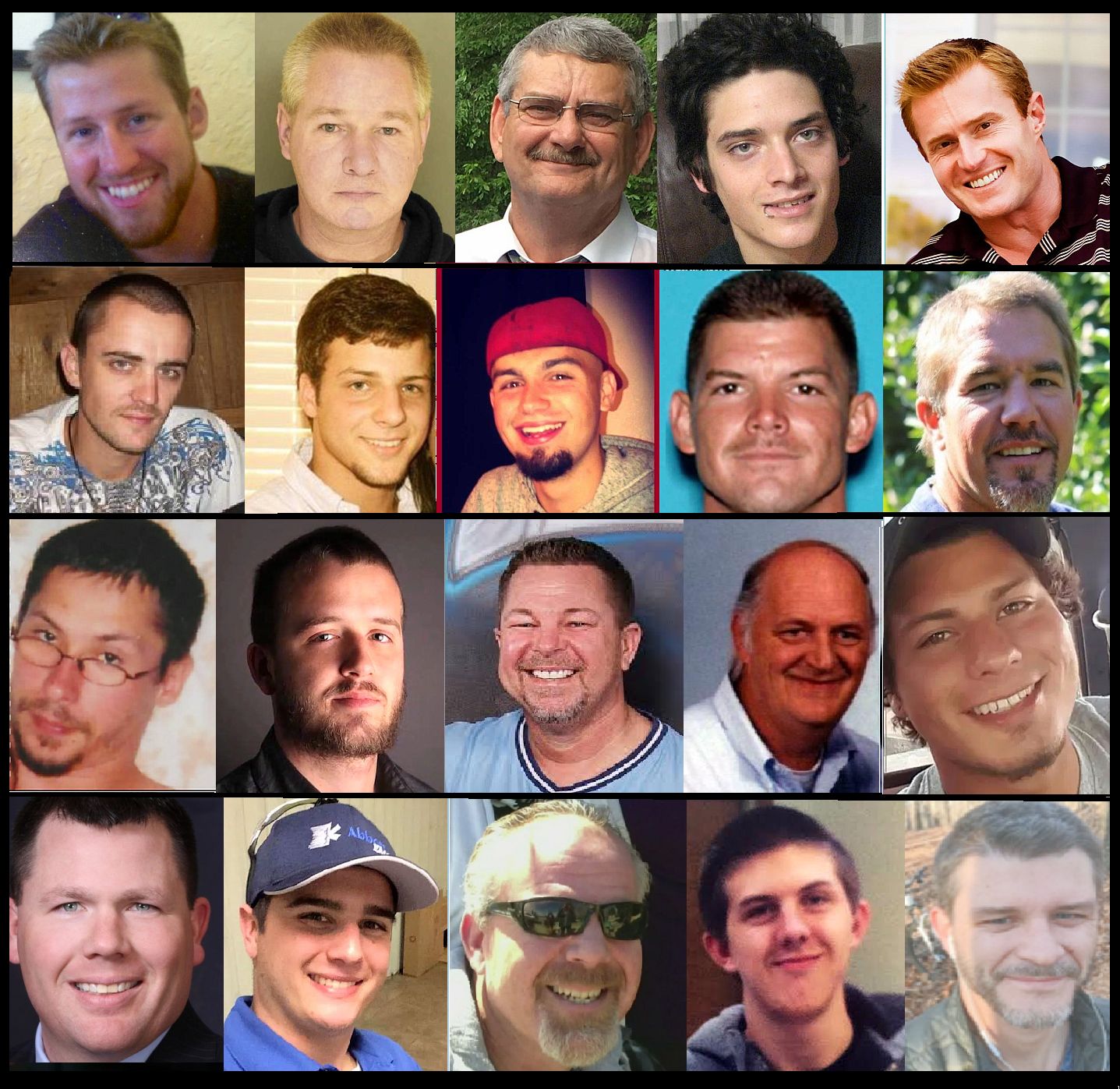
But what does not make the international headlines--not ever--is that in the United States, a white man
is killed by the cops every
15 hours.
Everyone knows the name
Freddie Gray or Michael Brown, but not many know Zachary
Hammond, Daniel
Shaver, Dylan
Noble, Justine
Diamond, Jesse
Jenson, Benjamin
Evans, Jason
Lappe, William
Bowers, Bailey
Turner, Tyler
Miller, Eric
Scott, Seth
Adams, Cody
Wayne Jarrett, Bobby
Rex Horne, Richard
Dinneny, Danny
Cupps, Jerry
Hardwick, Gilbert
Collar, Dillon
Taylor, Robert
Henning, or John
Geer.
Death by cop--to general indifference
When a white man is killed
by the police, not only do Whites not riot, they don’t even seem to lift an eyebrow.
It is possible to consult a list of
all killings
by U.S. policemen: Unsurprisingly, the vast majority (from all
races) are the result of a suspect lunging at police with a weapon, generally a
knife or gun. But a great many are not.
So why does the white
community shrug when one of their own is struck down, while the black community
treats these incidents as worthy of burning down cities?
Are Blacks really affected
disproportionately by police violence?
Brian Burghart aims to find out. His database Fatal
Encounters exhaustively tracks racial data on civilian deaths in the U.S. caused by police
encounters.
Over the last 20 years,
they count 28,126 total deaths due to encounters with the police. (Causes:
shooting, vehicular death, taser, medical event, asphyxiation, drugs.)
47% of them were white, 27%
black, 16% Hispanic, 2% Asian (6% were race unspecified).
The 2010 census (which
falls square in the middle of this period) showed the U.S. population to be 62%
white, 13% black, 16% Hispanic, and 5% Asian. This means that by race, rates of death-by-police per population group look like this:
Thus, blacks are roughly
two and half times more likely to die in an encounter with the police than
whites. They’re a little more than twice as likely as Hispanics to die this
way, and a whopping five times more likely than Asians.
But do all Americans have brushes
with the police at the same rate? Instead of just comparing the 'Fatal Encounters’
data to the general population, it would be more useful to compare it to the
population that has encounters with law enforcement. If one out of 100 Blacks
who have police run-ins die from them, but only 1 out of 1000 Whites who have
police run-ins do, then that tells us something more salient.
What does the data say?
Department of Justice arrest
records for the year 2018 report 7,710,900 total arrests (all crimes), of
which Whites made up 69%, Blacks 27%, and Asians 1.4%.
(Hispanics,
which are not broken out from White / Black, are listed as 19%. We estimate, based on Census
statistics, that of that 19%, roughly 17% have been placed
into the “White” category and 2% into the “Black” category. We have thus
adjusted the White rate from 69% to 52%, and the Black rate from 27% to 25%.)
So, national arrest rates
vs. % of the general population look like this:
To put these two graphs
side-by-side:
These numbers are not
terribly far off from each other. So it would seem that as a general rule, each
ethnic group is killed in run-ins with police at roughly the same rate as that
group is officially arrested by the police. It just so happens that Blacks draw
serious police attention more than Whites do—but also more than Hispanics do,
and far more than Asians do.
So the real question is, why
do Blacks have so many more brushes with the police than other groups?
We have researched this
question at length, and would like to share some data.
It turns out that throughout
history, persons of Sub-Saharan African descent have had more trouble with the
law, including:
For a very long time,
then, and in many countries outside the U.S., Blacks have had more run-ins with
law enforcement than other ethnic groups.
But why is this the case?
We explore the data in
depth here:
In addition, there are
some interesting parallels between Blacks’ regular run-ins with the law and their
tendency to alienate white neighbors, explored here:
We hope you will find this
data of use in helping to analyze current events unfolding in America.
Update: A word about the mass spread of these protests around the world:
Over the last week, public protests over this incident have spread like wildfire around the whitest parts of the globe, drawing crowds of thousands.
Every major actor, singer, sports star, and politician has released a statement about Floyd's death. Late-night talk shows, once a haven of light humor, have become 60s-style consciousness-raising rap sessions.
Major corporations have bombarded social media to announce they're down with the struggle.
(See it all and so much more at Woke Capital.)
Boris Johnson, Angela Merkel, and even the Pope have all weighed in on this important international incident.
As a reminder, not since the 1960s race riots has America seen multiple cities go up in flames.
And not since the 2003 Iraq War protests (800 cities worldwide) has the entire planet marched in anger over America.
So how to explain the current worldwide outrage over a depressingly common but isolated instance of American police brutality? We suspect the causes to be many:
- Coronavirus lockdown: Young people have been cooped up for months with none of their usual outlets--sports, concerts, festivals, bars, parties, nightclubs. Suppressed energy is waiting to burst.
- Mass unemployment: Coronavirus has led to tens of millions of job losses in the first world, especially the U.S. This is a way to express despair.
- Trump anger: Lingering rage at Trump's 2016 victory, failure at all attempts to depose him by soft coup (Russiagate, etc.). Non-stop media drumbeat that he's the next Hitler.
- Riot cycles: We haven't seen big race riots since the bloody days of Obama's tenure, and it was simply 'time.'
- Far left revolution: The highly-organized nature of the white rioting has led some to believe big-pocketed fomenters of 'color revolutions' are using Antifa as foot soldiers in yet another coup attempt.
The fact is that although the U.S. is undergoing the least racist period in its history, and is indeed now one of the least racist places in human history, its citizens are convinced that just the opposite is true.
When politicians, policemen, and soldiers kneel in 'solidarity' while dozens of cities burn, this gesture might puzzle us.
Having observed Afro behavior on North American soil for 400 years, Euro-Americans all know deep down that these people are profoundly different from themselves. They struggle to think abstractly, to plan ahead, to delay gratification, to contain their own aggression. Blacks themselves joke about their own foibles endlessly. This is why black crime rates have always and everywhere been higher than other groups'.
No amount of affirmative action (job, school and civil service quotas), busing, set-asides, welfare, free home loans, Hollywood pandering, bowing and scraping from leftists, or white self-flagellation has seemed to improve their behavior one iota.
Everyone in the U.S. knows that Afro-Americans' problems with the police are 95% of their own making. (George Floyd's death is the exception, not the rule.)
White Americans may be sensing more and more, even subconsciously, that their black brethren are simply incapable of doing better. That this group seems to be born with a kind of behavioral handicap which afflicts their neighborhoods, schools, companies, and the cities and countries they run. And there is nothing ethnic Euros can do to fix it.
Deep down, we suspect, that is why so many around the world are taking the knee: It is quite simply a human tragedy with no solution.
And all we can offer are empty gestures.
Thank you for reading.
Please stop by again for our first new piece post-hiatus, coming very soon.
Godspeed.