Showing posts with label Foreign Policy. Show all posts

31 March 2022

The Other Imperial War


Russia's invasion of Ukraine has held the world spellbound. Not since the Yugoslav wars has Europe seen such a conflict on its doorstep. The massive land-driven invasion brings to mind images of WWII.


As always in the fog of war, propaganda is flying on all sides. The first European conflict of the social media age has whipped up the western world into a frenzy of virtue-signaling.


Steve Sailer reports:    

The Metropolitan Opera said it would cut ties with Russian artists or institutions “allied” (to use state-funded NPR’s word) with President Vladimir Putin. … In Wales, an orchestra removed Tchaikovsky. … The University of Milano-Bicocca postponed a series of lectures on Fyodor Dostoevsky “to avoid any controversy.”

Governor Chris Sununu of New Hampshire signed an executive order directing state-run liquor stores to stop selling Russian products. Ohio, Pennsylvania, and Utah have done the same.  … FIFA has banned Russia indefinitely, meaning the country won’t be able to compete for the World Cup. The International Paralympic Committee has also banned Russian athletes.

What prides itself as the “United Nations of cat federations” (FIFe) has banned Russian-owned and Russian-bred cats from all competitions because it “cannot just witness these atrocities and do nothing.”


Russia's 'imperial' ambitions have shocked the West. Images of bombs falling on homes, tanks rolling through cities, dead children on stretchers—it is appalling. 


So appalling, in fact, that it is easy to forget the murder and mayhem perpetrated by that other great imperial power these last 80 years. As 'Physicist Dave' puts it, 

'Try to name all the countries that have been attacked, invaded, bombed, conquered, or had their governments overthrown by the US just during your lifetime.

Really — get a piece of paper and try to write them all down.

There are so many that I bet that you cannot even remember them all.'


We will take up the challenge.


America's imperial adventurism has become so omnipresent on planet Earth these last three-quarters of a century that we hardly seem to notice it.


In condemning the suffering caused by Mr. Putin's war, most Americans seem oblivious to the fact that their own tax dollars support a world-spanning empire that has its claws sunk into every inch of the globe, spying, prying, arming, meddling, funding, bombing, and starving. The 80-year 'Pax Americana' has come at an unimaginably heavy cost.


We thus propose to scrub off the blue and yellow greasepaint, just for a moment, and to remember that other long, long imperial war.


I. The Cold War


As the two big teams jockeyed for position on the planetary chessboard for half a century following WWII, the U.S. developed a mortal fear of anything even remotely redolent of socialism, be it near or far.


This led to regular covert and overt U.S. action against democratically-elected governments and in favor of dictators pledging allegiance to free-market capitalism.


A stroll down memory lane…


12 March 2018

The Progressive Project: Re-Colonizing Africa


The film The Black Panther has been taking Hollywood by storm. Progressives in particular are excited:
The film is set in Wakanda, a fictional technologically advanced country in East Africa which was never colonized. For people of African descent, the kingdom of Wakanda finally brings a searing question—what if the colonists hadn’t arrived and Africa had been allowed to develop unencumbered by international influence?—to the big screen.
Is it true? Would an un-colonized Africa have given the world an advanced, high-tech utopia?

We at TWCS are not so sure. 

Two generations after colonialism ended, alarmed that Africa seemed to be sinking rather than swimming, Tony Blair gathered a 17-person commission to examine the question:


When former colonies across the globe began in the 1960s to prepare themselves for independence, nobody was that worried about Africa. The anxiety was all for Asia. 
That was barely four decades ago. Today Africa is the poorest region in the world. Half of the population live on less than one dollar a day. Life expectancy is actually falling. People live, on average, to the age of just 46. 
… Africa is the only continent in the world which is stagnating. Why has it fallen so far behind?
African poverty and stagnation is the greatest tragedy of our time. Poverty on such a scale demands a forceful response. … Africa requires a comprehensive ‘big push’ on many fronts at once.  
Investing for economic growth means rebuilding African health and education systems, many of which are now on the point of collapse.

From the World Food Conference in 1974, at which Henry Kissinger declared 'In ten years no child shall go to bed hungry,' to the UN Millennium Summit in 2000, which vowed to end world hunger by 2015, Westerners have long been wringing their hands over this continent.


A Wakandian renaissance?  On the contrary, it seems the further colonialism recedes into the past, the more desperate Africa's situation becomes. 

Fifty years after independence, then, Tony Blair, Bob Geldof et al. have in effect produced a 464-page manifesto calling for...


...the re-colonization of Africa. 


On what do we base this claim?

02 February 2017

I Lift My Lamp Beside the Cold Hard Facts


Why, one may ask, have so many leftists gone ballistic over a short stoppage on immigration from 7 terror-prone states?  


Crowds are mobbing airports. Pundits, movie stars, sports players, foreign heads of state, all lifting their voices in horror….


As though such a banal, oft-practiced, and sensible measure were some kind of crime against humanity.


Headlines courtesy of Breitbart News


It is a question worth asking. An alien arriving from another planet might think Trump had just announced he was planning to rain down bombs on these countries for years. (Thus confusing Trump with his predecessor.) Such country-specific migration blocks are nothing new, and have been a favorite of Democrat presidents from Obama to Carter to old FDR himself. Yet our current hysteria continues unabated.


One can't be blamed for feeling as though one has arrived at Saint Anthony's 1700-year-old prophecy. Truly, has the whole world gone mad?

Though we're hard at work on our next piece, we're taking a quick break to provide a few links to those seeking some facts and data in the midst of this planetary pants-soiling. 

Some may wonder:

02 July 2015

Reacting to Spree Killings, Progressively


[Please excuse this brief detour; we are still hard at work on our 'Re-colonization' series.]

Of the many things Progressives are known for, number one is being on the right side of history.

So in the wake of this latest U.S. spree killing, we turn to our leading leftist voices to help us make sense of the madness.

Having studied their recent corpus on the question of the spree-killer-for-a-cause, we believe we've found some progressive principles to light our way.


I. Do not make generalizations about his group

28 May 2014

Foreign Policy and the Less Able


We have asked if Sub-Saharan Africa can really be considered 'post-colonial,' and concluded that it cannot. When the More Able butt up against the Less Able, the power dynamic can be so uneven that normal relations are impossible.  Westerners (and, increasingly, Easterners) just can't seem to keep their fingers out of all those little pies, commercial or humanitarian.   But the doctrine of international relations today says that all peoples sit at the same table, negotiating as equals.

If it were proved tomorrow, beyond a shadow of doubt, that Sub-Saharans as a group were far less able than Westerners,... what would be the right policy response?  We at Those Who Can See argue that such a policy framework is not hard to imagine-- as it is largely the one being used now.


World Trade Organization:  Do we all belong at the Grown-ups' table?


1) Trade policy

We don't force children to play by the same rules as adults. In the context of the WTO, if a More Able people were faced with a profoundly Less Able one, what could be considered a 'fair' trade position to take? It may look something like this:
The first Lomé Convention (Lomé I), which came into force in April 1976, was designed to provide a new framework of cooperation between the then European Community (EC) and developing ACP [African, Caribbean, Pacific] countries, in particular former British, Dutch, Belgian and French colonies.
It had two main aspects. It provided for most ACP agricultural and mineral exports to enter the EC free of duty. Preferential access based on a quota system was agreed for products, such as sugar and beef, in competition with EC agriculture. Secondly, the EC committed ECU 3 billion for aid and investment in the ACP countries.


Why are these countries singled out for special treatment?  After all, the list of places colonized by Europe is much longer:

15 May 2014

The New Face of Colonialism


'Take up the White Man's burden--
The savage wars of peace--
Fill full the mouth of Famine
And bid the sickness cease;
And when your goal is nearest
The end for others sought,
Watch sloth and heathen Folly
Bring all your hopes to nought.'


The colonial era, we are told, is over. The imperialists have retreated to their shores and the third world now happily governs itself.

For much of the planet, this is true. India and China, two great colonial occupations of the 19th century, have wrested control of their economy and food security. It is largely sub-Saharan Africa, home to 1/6 of humanity, which remains the red-headed stepchild of international relations.

These rich lands were coveted by right-wing industrialists, and their people's uplift coveted by left-wing do-gooders. The footprint left by the former? Ports, canals, roads, railways, and a functioning government (their own). By the latter? Churches, missions, schools, hospitals.

What both camps agreed upon, though, was that the colonized were not able to provide these things for themselves.

Upon which they still agree today.

While many believe we live in a 'post-colonial' world, we here at Those Who Can See argue that we do not.  'We're all equal,' sing both the right and the left. But their actions do not match their words.  We believe the colonial project is, on the contrary, roaring along as full-steam as it ever did. What is the evidence?

03 September 2013

Arabs and Liberal Democracy: A Primer


The Arab Spring, two years on:


Since the first waves of revolt swept the Arab world two and a half years ago, we at Those Who Can See have dug into the data to find out just how likely is a series of Swedens on the Sahara.  We have looked at Arabs through observers' anecdotes, democracy and freedom indices, their peculiar marriage practices, and their opinions on Western 'human rights.'

For those who feel the media's handling of the question falls short, we thought it might be useful to present a synthesis of the data we've found so far.  

So: What is the evidence English liberal democracy will take hold in the Muslim Arab world?


First, a regional sum-up, pre-Arab Spring:


The Middle East and North Africa (MENA) remains the most repressive region in the world—16 out of 20 countries in the region are categorised as authoritarian [most repressive category out of four].

24 September 2012

Arab Autumn?


The Arab Spring, eighteen months on.  Has a passion for freedom of speech, separation of religion and State, and the 'free marketplace of ideas' seized the Arab world?  Two weeks ago a Coptic Christian living in California,  in no way affiliated with any U.S. government entity, published a comically low-quality 13-minute film trailer ridiculing Mohammed and Islam.  The Arab world's reaction?

In Egypt:


In Lebanon:


In Kuwait:

In Palestine:


In Tunisia:


In Yemen:


What about the Muslim world generally?

12 June 2012

When America lays herself down to sleep


The more able and the less able: they have always found a way to co-exist on planet earth.  Conquest and forced tribute was one way. Conquest and slavery was another.  Conquest and political domination was a third.


But such were the ways of the past.  Today, for the first time in recorded history, a world-wide consensus holds (more or less) that naked conquest is Not Alright.  Now that the inhabitants of every square inch of the globe have a fellow in a swivel chair at the U.N. claiming to speak in their name, colonialism is no longer the done thing.

But the More Able cannot help but dominate the Less Able.  The Cold War took foreign conquest underground, and what had once been done by plunking down a flag and a cross was now pulled off via spies, discreet assassinations, coups, death squad training, and the like.


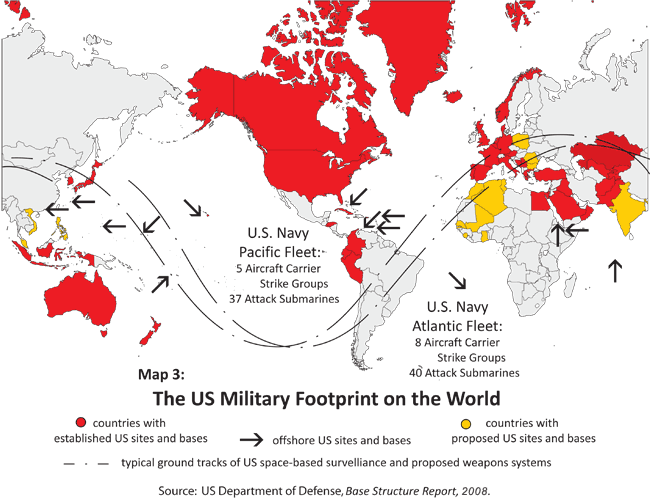
Even that great chess match drew to a close, and we are today left with one bloated power whose military tentacles circle the globe. A power who patrols the world's seas from the South Pacific to the Gulf of Aden to the Caribbean.  Despite this pseudo-empire on which, like her 19th-century cousin's, the sun never sets, America does her best to paint a rosy face on world dominance.

But no empire lasts forever. The vultures have been circling for years squawking of the U.S.'s demise.  The question is not 'will she fall?'--what goes up must come down--but 'when?' and 'what comes after?' Who shall be the 21st century's 'more able?'


International relations, like nature, abhors a vacuum.  Should the U.S. tumble from its perch, others will rush in to fill the void.  Those unaware of human biodiversity--almost all mainstream analysts today, including those at Stratfor--are missing a major bit from the toolkit, and their analysis suffers for it.  Only amateurs are left to ask the race-realist questions.  Two valid ones are, 'is Euro-America on the decline?' and, if so, 'who shall rush in to fill the geopolitical void?'


28 May 2012

Corruption: The exception or the rule?


IMF chief Christine Lagarde raised hackles this week when she suggested one way Greeks could get themselves out of the pickle they're in would be to cut back on their national sport of tax-evasion.  She also suggested her tears of pity would be better spent on Nigerien children, forced to walk two hours to school and sit three to a chair, than on profligate Greeks.


 Africans and Greeks: Pity sweepstakes?


The Niger comparison was interesting, as it suffers from some of the same problems as Greece, but at astronomically higher levels. Among them is the one which gives the IMF fits, that stubborn, impossible-to-remove kudzu, the sinister C-word: Corruption.

It has become gospel among international policy-makers that corruption is a big problem, but a fixable one. Bad laws = corruption. Good laws = no corruption.  They thus traipse around the planet giving PowerPoint presentations on how to open your very own Anti-Corruption Ministry, sure that they're leaving little Swedens on the Sahara and Englands on the Euphrates in their wake.

With just a bit of HBD knowledge, a policy-maker might ask: What if corruption were not a product of laws, but of men?  What if corruption came from men's beliefs, their character traits, their deepest biological instincts? What if it is our natural state?  What if it can't be fixed? What then?


Besides the 'bad-laws' fallacy, a second error made by policy-makers is the 'bad-leaders' fallacy.  The poor honest folks in Country X suffer terribly because their leaders are so corrupt. And yet coup/election after coup/election, as if by magic, one bad leader after another comes to power.  Unless these people are being airlifted in from a foreign land, one can presume they are made of the same stuff as their countrymen.

In addition, what the throw-the-bums-out crowd fails to realize is that in corrupt countries, everyone (or almost) is on the take.  The same character traits that drive government ministers to  accept suitcases full of cash are also likely to be found in small shopkeepers who say, 'Do you want a receipt for that? Are you sure? (wink wink)', as well as the customer who responds, 'No no, of course not! (wink wink)'


Lagarde's admonishment to 'Pay your taxes!' is merely spitting into the wind.  In a country where the average taxpayer can buy off the average tax inspector with a sufficiently fat envelope, what precisely is she hoping for? Who watches the watchers?  This has led some Eurocrats to cry, 'Send in foreign tax inspectors!', which would be amusing were it not so disturbing.  Is a country whose government officials are under the control of a foreign power not by definition a colony?

We are thus led to ask: Corruption, that headache of international policy-makers--is it a behavior, or a state of being?

21 April 2012

Building a Better Currency Union


Like so many policy domains, international economic policy in the West has fallen victim to the Late Twentieth Century Delusion: 'People are people.'

Foreign policy was once the playground of race realists at every level.  The only trace of this left may be the Pentagon, who in its double-secret PC-proofed dungeon whips up instructional pamphlets aimed at keeping GIs from getting killed by letting them know some people are, in fact, Not Like Us.  (Or used to anyway.)

Back when foreign conquest was the norm, the primitive peoples of the world were seen as docile labor to exploit (rightists) or as poor backward heathen to civilize (leftists).  But what no one disagreed on was that they were, in fact, primitive.  That is to say, Not Like Us.

De-colonization, the U.N., etc. at last clued us in to the fact that everybody on planet earth was, in fact, just like us.  International economic policy has thus taken on a rather surreal cast, as on the one hand the West insists that Africa is its equal, but on the other hand sets up trade agreements with her that make her appear, decades after de-colonization, to be a slightly retarded child.

One current example of the perils of 'People are people' is that of the European Monetary Union, or Eurozone.  Conceived in the chaos of the waning days of Bretton Woods, it aimed to be something entirely new--a monetary and economic union of several large sovereign states.  The hard work of Jacques Delors, among others, made it all happen.


(The British, then as now, were not enthusiasts.)


Ten years later, it all seems to be falling apart. (Don't be fooled by the lull in hysterics; disintegration continues apace.) Economists are openly warning that to survive, the Eurozone will have to split in two.  Yet the 2011 EU decision-makers seemed totally baffled by the meltdown. Why?

The reasons are many; we shan't look at all but only one: People aren't people.


The Eurozone, some have surmised, was at its heart an attempt by the French to neuter fearsome Germany once and for all.  The German cities and states had long been wealthy trade centers, but unification in 1871 gelled them into a power that brought Europe to its knees.  Germany was, in a word, scary.  Forcing her to entwine her fiscal fortunes forever with those of Mediterranean Europe... what better way to leash the giant?

So how did it happen?

As Bretton Woods broke down, several European states began to peg their currencies to each other:  The European Monetary System (EMS) was born.  The end goal was a single currency for all of Europe, with liberté, égalité, and fraternité for all.  But there was always a niggling problem.

During this time [1983-87], the Deutsche mark evolved as the anchor currency of the system, and the anti-inflationary policies of the Bundesbank became the reference point for partner countries....

There were perceptions that the system was "asymmetric" because of the dominant role of the Deutsche mark...

In the wake of the Wall Street crash of October 1987, ...international funds sought refuge in the Deutsche mark, and strong tensions developed within the ERM [European Exchange Rate Mechanism]... (1)


What to do when the dream of equality bumps up against the reality of superiority?

While Germany may have chained herself to this shaky ship to atone for her WWII sins, for the weaker southern economies it was basically a free-cash bonanza. (Much like EU accession).

Once they had joined the euro zone, Europe's southern countries gave up trying to sort out their finances, says [ex-Finance Minister] Papantoniou. With a steady flow of easy money coming from the northern European countries, the Greek public sector began borrowing as if there were no tomorrow. This was only possible because the country, in becoming part of the euro zone, was also effectively borrowing Germany's credibility and credit rating.

Then the 2008 world credit crunch hit and the tide went out, revealing who was not wearing a bathing suit.  Unpayable debts, hand-wringing, finger-pointing, late night negotiations, harried Brussels press conferences, riots, tear gas... Time to throw in the towel?


07 February 2012

The Voice of the People II: Arab Democracy


We have wondered, will any democracy taken up by Arab Muslims inevitably become authoritarian?


One might well ask it of Russians. Twenty years after the wall crumbled with a whimper and the West's Democracy 101 knights rode in, where are they?

[International observers of the 2008] elections concluded that they were "not fair and failed to meet many OSCE and Council of Europe commitments and standards for democratic elections." [...] Frequent abuses of administrative resources, media coverage strongly in favor of United Russia, and the revised election code combined to hinder political pluralism.

[...] A law enacted in December 2004 eliminated the direct election of the country's regional leaders. Governors are now nominated by the president [...] The judiciary is not independent, is often subject to manipulation by political authorities,...

... The government uses direct ownership or ownership by large private companies with links to the government to control or influence the major media outlets, especially television, [...]  Unsolved murders of journalists have increased the reluctance of journalists to cover controversial subjects...

The Economist Intelligence Unit's World Democracy Index (1 - 10, 10 being 'most democratic') lists four categories--'Full democracy,' 'Flawed democracy,' 'Hybrid regime,' and 'Authoritarian regime.'  Cut-off for this fourth category is a score of 4.00 or lower; Russia misses it by a hair at 4.26.

Perhaps not exactly what Francis Fukuyama had in mind.

But little matter.

Moscow street protests seen round the world (thank you Facebook) have roused the true believers from their slumber.  English Liberal Democracy is coming to Russia, for real this time, after twenty years of Some Other Kind of Democracy.  Just as it has come to the Middle East in 2011, after sixty years of Some Other Kind of Democracy.


Or is it.


In 1915 Nikolai Berdyaev wrote,

The Russian people does not want to be a masculine builder, its nature defines itself as feminine, passive and submissive in matters of state, it always awaits a bridegroom, a man, a ruler.  ...  The state ruling authority always was an external, and not an inward principle for the non-statist Russian people; it was not created by her, but the rather came as it were from the outside, like a bridegroom to the bride.

And so often therefore the ruling power has provided the impression of  being foreign, ... the state -- is "they" and not "we".


'They' and not 'we.'

Whither the demos?


30 January 2012

The Voice of the People


The Arab Spring one year on: Switzerland on the Sahara and Norway on the Nile have yet to materialize.

“I remind all media that they have to be accurate; we are not celebrating the first anniversary of the revolution; we are reviving the revolution in its first anniversary,” tweeted well-known writer Ayman El-Sayyad.

Hundreds of thousands of Egyptians thronged Cairo's Tahrir Square Wednesday morning, renewing the atmosphere of mass protests witnessed in the country a year ago, Ahram online reported.

“Down, down with military rule,” they chanted.

Though the house of Mubarak was no more, the shadow of his legacy still lives on in the ruling Supreme Council of the Armed Forces, which took power after Mubarak’s resignation, pro-democracy protesters say.


But materialize they shall.  Thomas Friedman says so.  So does The Council on Foreign Relations. So does Hillary Clinton--and she's ready to put your money where her mouth is:

Three weeks ago, the State Department's Middle East Partnership Initiative sent Congress what's known as a "congressional notification," requesting permission to shift $29 million in funds from other programs in the region. State wants to shift $20 million to democracy promotion efforts in Tunisia and around the region. Another $7 million would go supporting rule of law and political development programs in the Middle East. $1 million would go to youth councils in Yemen.

Spending our hard-earned dollars on 'democracy promotion' has always had its fans.  Traditionally, U.S. policy has been to push democracy where it serves her strategic interests, and to crush it where it does not.  The Middle East, your blinking gas gauge reminds you, falls under door #2. But throngs pouring into the streets over a young Arab who had immolated himself in despair could not be ignored, and the about-face was total: Out with dear friends Mubarak, Gaddafi, and Ben Ali; in with...

...democracy?


07 January 2012

A German by Any Other Name...


The Maastricht treaty, indeed the whole idea of the E.U., is based on the principle that 'People are people.' Also known as the Late Twentieth Century Delusion.  As we have seen, the Think-Tankers who cook up international policy are in utter thrall to it.  No reason, say they, why a semiconductor industry such as flourishes in Japan couldn't do the same in Angola.  No reason at all.  All that's missing are the right incentives, the right institutions, the right...

...Shhh. Don't say 'people.' Crimethink.

It has become obvious that the Eurozone will survive in present form only if the Germans keep paying the debts of the Greeks.  Talk of new 'institutions' and 'treaties and 'incentives' is silly.  The incentives and treaties and institutions have been in place for ten years; they have not yet been able to turn Greeks into Germans.  Nor will they.

Why not?  What makes a German a German, and a Greek a Greek?  Couldn't we switch out the populations of these two countries and just assume that Greek-Germany and German-Greece would continue to function as they always have?

*               *               *

Though it has become terribly unfashionable, there is little as satisfying as reading old-time authors' stout observations of other peoples, untouched by today's feminized hive-mind and its cries to not hurt anyone's feelings.  It was once taken for granted that a German was not a Greek.  Would today's Eurozone decision-makers come back to this distant wisdom, they might yet come up with some policy worth the name.

So-- a 2012 currency zone containing both a Germany and a Greece will not function, and we need writers from before the Wars to give us a hint as to why:


05 November 2011

More Able and Less Able


The More Able will dominate the Less Able, always and everywhere.

Right-thinking people in the West are indignant about Europe's past colonial plunders.  They are furious at the thought of Western companies swooping in to buy up state assets from highly-indebted African countries.  More sanguine are they, however, about this:

"Roll up, roll up, roll up. Elgin Marbles, Acropolis, Mykonos. Anyone? You don't have to be an ancient Greek historian to understand the significance of it. But maybe it helps.  [...]  Under pressure to raise €50bn as the quid pro quo for its massive €110bn (£98bn) bail-out, Greece is being forced to hawk its industrial and commercial backbone to the highest bidder."

Who's buying?


05 August 2011

'Jasmine Revolution'

Tahir Square, Cairo, 29 July 2011 
 'Instead of "Peaceful, peaceful," which demonstrators have chanted during confrontations with security forces, they repeated "Islamic, Islamic"... '

[In light of current bumps on the road to English-style liberal democracy in the newly 'free' Arab world, we here re-visit  '"Democracy promotion and the 'Jasmine Revolution'" (6-11-11).]


The 'Arab Spring' seems to have taken the Middle East, and everyone else, a bit by surprise.  While the Pentagon sweats at the thought of a North Africa full of little Irans, the State Department clicks its heels and throws on its apron, anxious to get in the kitchen and start cookin' up some democracy:
In the wake of the democratic revolutions sweeping the region, the State Department is rapidly trying to reevaluate its approach to Middle East democracy promotion. But without a budget for fiscal 2011, and with no idea of what awaits their budget in fiscal 2012, State is being forced to move money around to speed funds to the Arab countries that are trying to make the difficult transition to democracy.


'Democracy' is what they have now.  'Some other kind of democracy' is what the author maybe meant, but perhaps he had a word limit.

In any case fear not, brave tax-payer, you'll do your bit to help the Arabs get 'some other kind of democracy.'  In fact, you already are:


21 July 2011

Colonialism, Today II

A small country, a relatively happy country, a country who's been producing wealth at more or less the same level for years... 


...Who one day decides to abandon control over its own monetary policy.  To take that sovereign control, stuff it in an envelope, stick on a stamp, and mail it to a country far, far away.

A boxing club made up of only heavy-weights and middle-weights has the magnanimity to invite in a few feather-weights.  How kind.  How inclusive. How optimistic.


What could possibly go wrong.


This, apparently: