Showing posts with label Nation. Show all posts

16 December 2022

Great Britain, great replacement? Census 2021


We have seen the data on the so-called 'great replacement' which Westerners are said to be visiting upon themselves: In the U.S., in France, in Belgium, Germany, Sweden.


For our piece on the U.K., we had no choice but to use the 2011 census numbers, as those from 2021 had not yet been published. 


But they have now. So let us shine a light on the latest demographic snapshot of old Blighty.


13 September 2022

Who's Replacing Whom? Part II: Belgium, U.K., Germany, Sweden


As we saw last time, France has become the epicenter of what Renaud Camus calls le Grand Remplacement in Europe.


But what about her neighbors?


Bassam Tibi, a Syrian-born professor who teaches in Gottingen, Germany, says:


Between the middle of the 20th and the beginning of the 21st century, the total number of Arabs increased from 80 million to 320 million. Today we can speak of about 400 million Arabs, of which 50% are under 20 years old. These only see a prospect for the future when fleeing to Europe. 
That’s why Bernard Lewis in the quoted interview has suggested that Europe will be Arab-Islamic by the end of the 21st century. Ye’or also states: “Integration has generally failed.” Instead, “Islamization” is taking place.


Pew Research has crunched the numbers on Muslim immigration to Europe, giving a projection in 30 years if the inflows stay high (and there is no reason to believe they won't):


So what exactly does the data say about the demographic situation of France's neighbors? Let us take a look. 

12 September 2022

Who's Replacing Whom? Western Europe: France


[This piece was originally published on June 30th 2022, but was erased due to a technical glitch. Happily, the Wayback Machine has saved our bacon. Here it is again.]


The recent presidential election in France saw a new face on the scene: That of Eric Zemmour.

His major campaign theme was that France's indigenous population was being replaced by outsiders who are culturally foreign, with the zealous support of the globalist right and the open-borders left.


The name of this transformation? 'The Great Replacement.'


This notion is endorsed explicitly by Eric Zemmour's Reconquest party, and implicitly by Marine LePen's National Rally. Together, these two parties gobbled up 30% of the votes, more than President Macron's centrist Republic on the Move party (28%).


The Great Replacement is an idea referred to as 'far-right' by the mainstream press, implying that it is somehow a marginal notion.


Yet opinion polls in France show that this belief is anything but extreme. No less than sixty-one percent of French voters think that it is a reality.


Are they right?


And what of the rest Europe? And the Anglosphere? 


31 January 2022

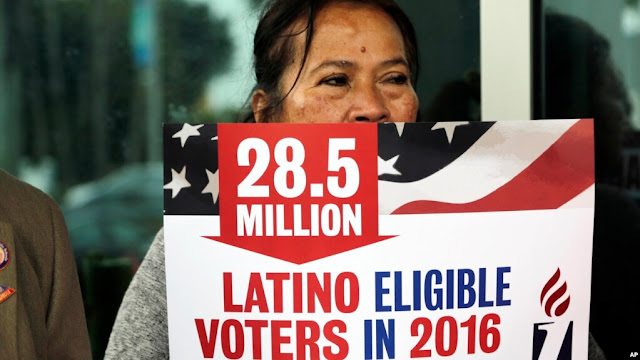
U.S. Census 2020: The Hispanic and Asian Nation


We recently did a deep-dive into the 2020 U.S. Census numbers, showing the demographic changes over a century in America's largest cities.


Today we take a more zoomed-in view, looking at the changes from 1980 to 2020. Our British Isles founding fathers launched a nation 'for ourselves and our posterity;' that nation is slowly but surely ebbing away.


What do the numbers say?


06 December 2020

2020 Election: The Beginning of the End?

We are currently working on a reader-requested piece on the question, ‘How exactly should a government deal with a massive underclass of hostile immigrants?’, to be published around the holidays.

But as we have not breached the question of the U.S. election and its aftermath, here is a quick data round-up. From Boston University:

A recent Washington Post headline says: “In America, talk turns to something not spoken of for 150 years: Civil war.” The story references, among others, Stanford University historian Victor Davis Hanson, who asked in a National Review essay last summer: “How, when, and why has the United States now arrived at the brink of a veritable civil war?

Another Washington Post story reports how Iowa Republican Congressman Steve King recently posted a meme warning that red states have “8 trillion bullets” in the event of a civil war. And a poll conducted last June by Rasmussen Reports found that 31% of probable US voters surveyed believe “it’s likely that the United States will experience a second civil war sometime in the next five years.”

Leftists have never digested Trump’s 2016 surprise victory, and conservatives see fraud in Biden’s squeaker of a win last month. ‘Blue’ and ‘Red’ America seem more hostile to each other than ever.

Far-leftists Antifa and Black Lives Matter spent the summer burning and looting America’s cities, whilst regular citizens defending themselves from rioters were pursued in the courts. All this in the midst of a pandemic whose 'lockdowns' have bent civil liberties to the breaking point. A sense of anarcho-tyranny seems to have set in, and many fear civil unrest could turn (or has turned) into low-grade civil war. 

For some it is a political divide which threatens our national unity, for others it is a racial one. And some are just whistling past the graveyard:


Are these fears founded? Are America's divisions too deep to overcome? If so, what comes next?


Having researched these questions before, we’d like to bring some data to the fore.


31 July 2018

Widening Circle of Empathy: The Final Frontier


The town of Székesfehérvár, Hungary--a thousand-year-old city home to the original royal court--just applied for the coveted 'European Capital of Culture.' The video they submitted was turned down flat by the E.U. jury. The reason?

'There are too many happy white people and crosses, and not enough migrants.' … One of the European Union’s experts said with astonishment: 'This is the propaganda film for white Christian Europe; everyone is white, happy and dancing in the streets.'

Just a few months later, the soccer World Cup final pitted France against Croatia. Before the match, France's Anti-Defamation League posted:


'France's team, multi-colored, multi-ethnic, goes head to head with a Croatian team that's distressingly uniform.  Knowing Croatia's history, no surprise. Balkan-centric, nostalgic for an era which worshiped only brute strength, they play a soccer that is bland, colorless, flavorless
'France will win—she's already won! She unites, welcomes, understands. … Let's keep fighting so that our Republic's values stay on top, even if—against all odds—we lose.'

Hungary 'too white,' Croatia 'colorless'… Whence this race-obsessed rhetoric? 

Steven Pinker has written at length about the 'widening circle of empathy.'  We at TWCS believe that it has four phases, and that certain Western countries have now entered the fourth and terminal phase: the desire for self-replacement.


On what do we base this claim?

And if true, where does it come from? How do we know when it's approaching? Is there anything we can do to stop it?


21 December 2017

Weapons of Mass Migration: Are You a Target?

Donald Trump's proposed immigration policies--though moderate by the standards of any other era in U.S. history--are spurring an unprecedented wave of outrage.

The immense waves of migrants (legal and illegal) pouring into the U.S. and Europe are, say his opponents, a blessing, a gift, even the only way to survive.


Is it true? 

Today there are a quarter of a billion people living outside their home countries--the most ever recorded in human history. But these mass movements aren't happening by chance-- far larger forces are at play.


We live in an era where demographic weapons are in fact being lobbed around the globe, disturbing the fragile ecosystems of human societies, in some cases threatening to topple them. 

Who is in the line of fire? Can one make oneself less of a target? 


How? 

06 July 2014

Breaking Up is Hard to Do


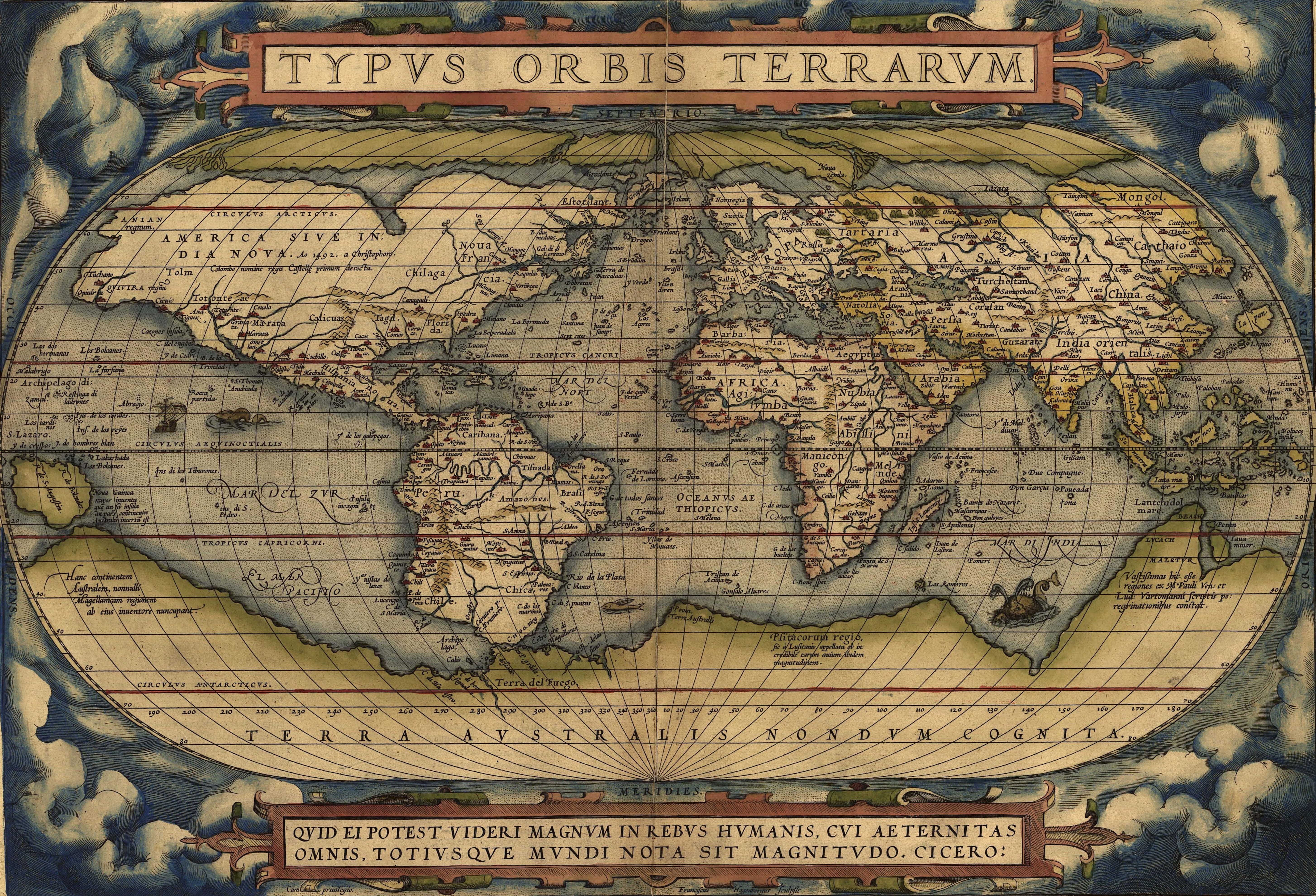
Political maps have changed much since one hundred years ago. Or two hundred, or five hundred.

Some changes have crept in; others have exploded. It can be interesting to look at old maps and think, how will ours look to our descendents?


Imperialism was the trend for much of the modern era. Most peoples were swept up into the folds of empires-- European, Turk, Chinese.


But West European colonialism dissolved in the 1960s, Soviet imperialism in the 1990s. Since then the trend has gone the other way:  States are fracturing ever more.


1960 to 1990: A multiplication of states


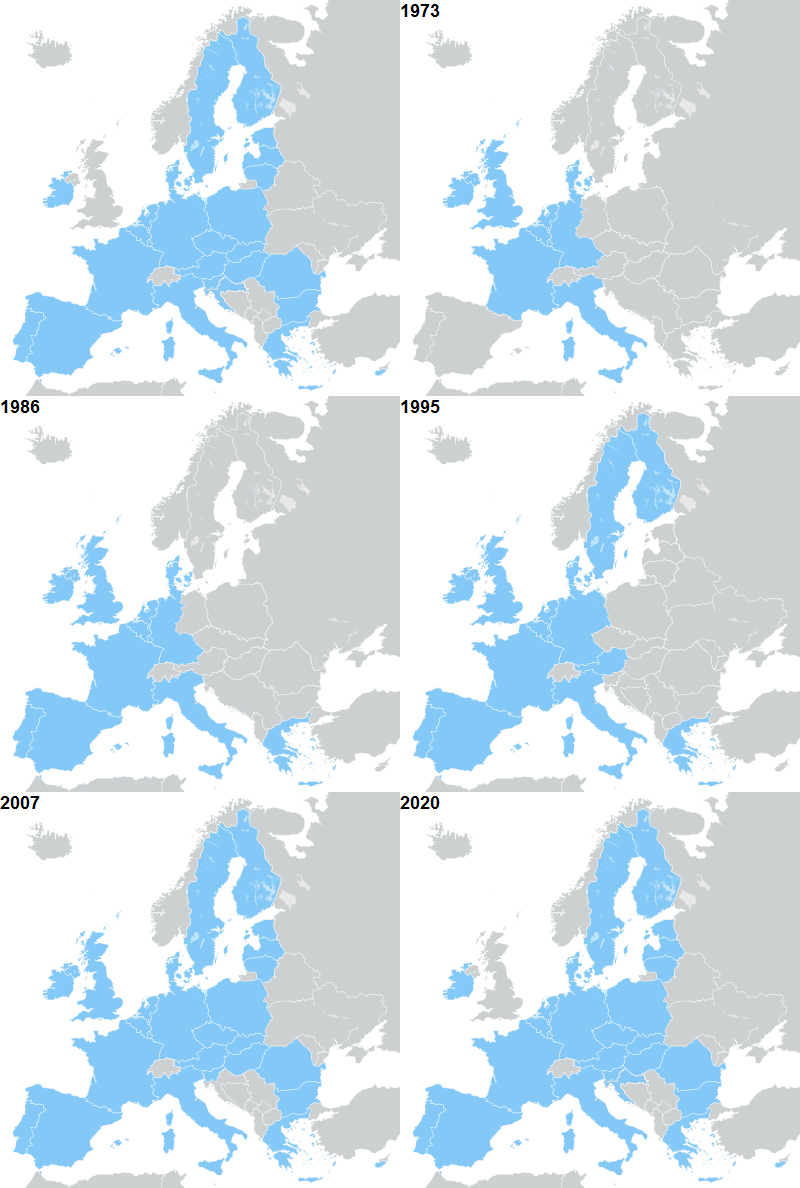
The one exception is the quasi-super-state known as the European Union, which has been hoovering up members as fast as it can.


The recent eurozone crisis has led to calls for 'a United States of Europe.'  Only a true federal authority in Brussels, with control over member states' moves, can lead to a happy European future:

European Commission vice-president Viviane Reding has predicted that the eurozone will become a federal state, while urging the UK not to leave the Union. ... “In my personal view, the eurozone should become the United States of Europe."
... Reding noted that euro countries have made an “extraordinary” leap in terms of integration due to the economic crisis. Citing the commission’s new powers to scrutinise national budgets and plans to create a banking union, she said: “a few years ago no one could have imagined member states being prepared to cede this amount of sovereignty.”

Indeed.

The United States itself, a grand experiment in federalism, has seen its central government intrude ever more deeply on states' rights over the last century.  Is this a happy thing?  At the same time, the massive post-1965 immigration experiment has flip-flopped U.S. demography.


These trends have created deep American fault lines.  Europe is in fact trying to emulate the U.S. at the very moment when the latter seems to be fracturing.  In both cases, then, we have a tension between creeping federal authority on one hand, and a desire by regions to throw off that authority on the other.

What does the future hold for these two super-states?

We at Those Who Can See feel it is naively optimistic to imagine in 100 years the maps of our descendents will look the same as ours.  Where are these two chunks of the Europsphere headed?

14 September 2012

Were you Assimilable?


(standing is an Irishman)
Puck Magazine, June 1889


A great many people today can look at this map...


...and conclude, 'This can only spell good things for America.'

Why?

'Anglo-America absorbed millions of alien immigrants in the 19th century, then went on to become the biggest superpower in world history!'


As it happens, both these statements are true. It is also true that after metal helmets replaced leather ones, the number of soldiers' head injuries increased. So did America become a huge superpower because, or in spite of, these aliens? Or a little of both?

And if these waves of 19th c. foreigners did make her stronger, can the same be said of the millions streaming in yearly now?

The question is by no means flip.  Many of the arguments used by immigration restrictionists in 2012 are identical to those used a hundred years ago.  It's a case of Chicken Little, says our open-border contingent--'Your predecessors said the sky would fall; it didn't, and this time it won't either.'

Who's right?

Why, just look at this mosaic:


A propositional nation, n'est-ce pas?


12 June 2012

When America lays herself down to sleep


The more able and the less able: they have always found a way to co-exist on planet earth.  Conquest and forced tribute was one way. Conquest and slavery was another.  Conquest and political domination was a third.


But such were the ways of the past.  Today, for the first time in recorded history, a world-wide consensus holds (more or less) that naked conquest is Not Alright.  Now that the inhabitants of every square inch of the globe have a fellow in a swivel chair at the U.N. claiming to speak in their name, colonialism is no longer the done thing.

But the More Able cannot help but dominate the Less Able.  The Cold War took foreign conquest underground, and what had once been done by plunking down a flag and a cross was now pulled off via spies, discreet assassinations, coups, death squad training, and the like.


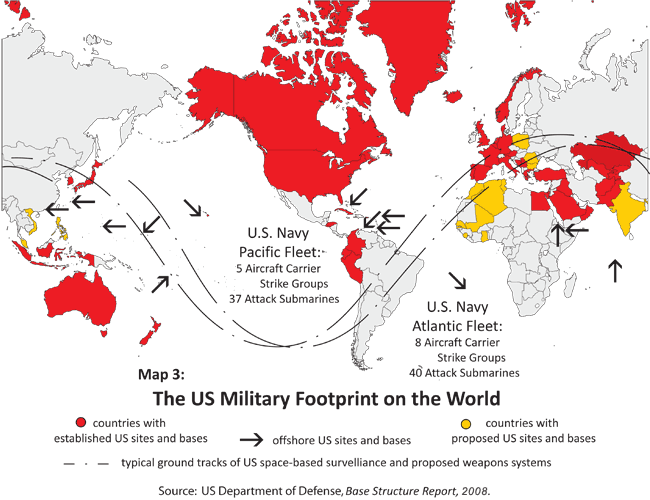
Even that great chess match drew to a close, and we are today left with one bloated power whose military tentacles circle the globe. A power who patrols the world's seas from the South Pacific to the Gulf of Aden to the Caribbean.  Despite this pseudo-empire on which, like her 19th-century cousin's, the sun never sets, America does her best to paint a rosy face on world dominance.

But no empire lasts forever. The vultures have been circling for years squawking of the U.S.'s demise.  The question is not 'will she fall?'--what goes up must come down--but 'when?' and 'what comes after?' Who shall be the 21st century's 'more able?'


International relations, like nature, abhors a vacuum.  Should the U.S. tumble from its perch, others will rush in to fill the void.  Those unaware of human biodiversity--almost all mainstream analysts today, including those at Stratfor--are missing a major bit from the toolkit, and their analysis suffers for it.  Only amateurs are left to ask the race-realist questions.  Two valid ones are, 'is Euro-America on the decline?' and, if so, 'who shall rush in to fill the geopolitical void?'


05 November 2011

More Able and Less Able


The More Able will dominate the Less Able, always and everywhere.

Right-thinking people in the West are indignant about Europe's past colonial plunders.  They are furious at the thought of Western companies swooping in to buy up state assets from highly-indebted African countries.  More sanguine are they, however, about this:

"Roll up, roll up, roll up. Elgin Marbles, Acropolis, Mykonos. Anyone? You don't have to be an ancient Greek historian to understand the significance of it. But maybe it helps.  [...]  Under pressure to raise €50bn as the quid pro quo for its massive €110bn (£98bn) bail-out, Greece is being forced to hawk its industrial and commercial backbone to the highest bidder."

Who's buying?


22 October 2011

Chalk and cheese


"Our Italian colleagues from University of Rome Tor Vergata and University of Parma proposed 
an idea that [as far as] public feelings of security and trust in the judicial system, southern and northern Italy should be treated as two separate countries. 
In their view, they are as different as chalk and cheese: in the northern part,
the sense of necessity in terms of obeying the rules and moral condemnation of corruptive conduct in authoritative organs is much higher than in the South."  


How many 'nations' can a nation contain?  Depends on whom one asks.  Inhabitants of the former Yugoslavia, the former Sudan, the former Rhodesia could perhaps enlighten us.  Or those living in the current Kashmir, or Caucusus, or Flanders.

Richard Griggs and Peter Hocknell have pegged the number of actual nations existing on planet earth at between 6000 and 9000.  Europe alone, they say, is home to over one hundred.  Lines drawn on maps by generals and statesmen tell us lies and half-truths.  One nation, different beliefs, different values, different characters: What can a map really tell us?

Here, for example, is the nation known as the Italian Republic: